
3 hr 30 min
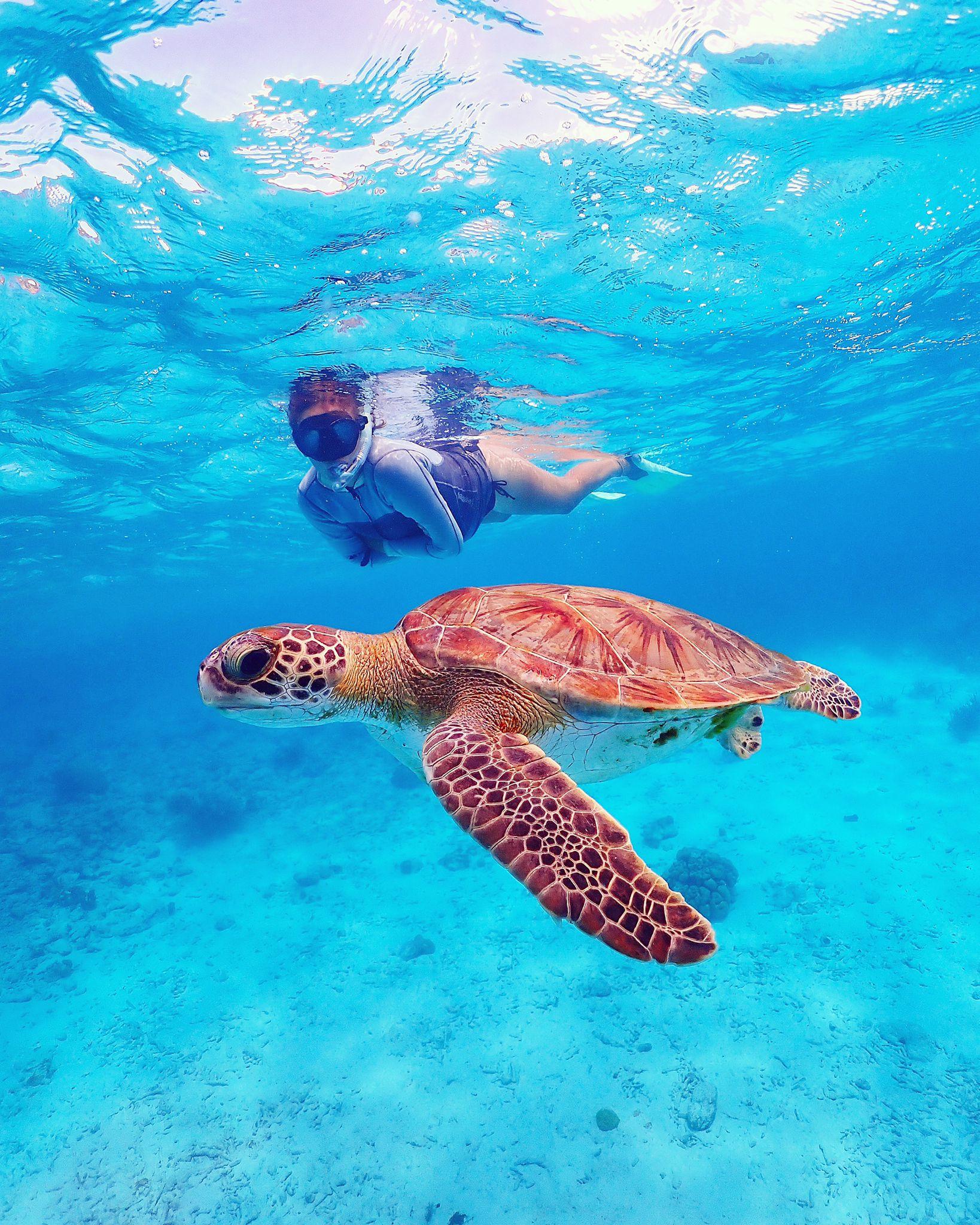
Marine Park Drift Snorkel Adventure with Klein Bonaire
Half-day snorkeling voyage to two pristine reef sites with expert guides and sea turtle encounters
Reserve
Hand-picked by our editors — only the best 5 experiences from 12 reviewed.
Verified partners for every tour, free cancellation where available, and instant confirmation on every booking.
3 hr 30 min
Half-day snorkeling voyage to two pristine reef sites with expert guides and sea turtle encounters
Reserve
2 hr 30 min
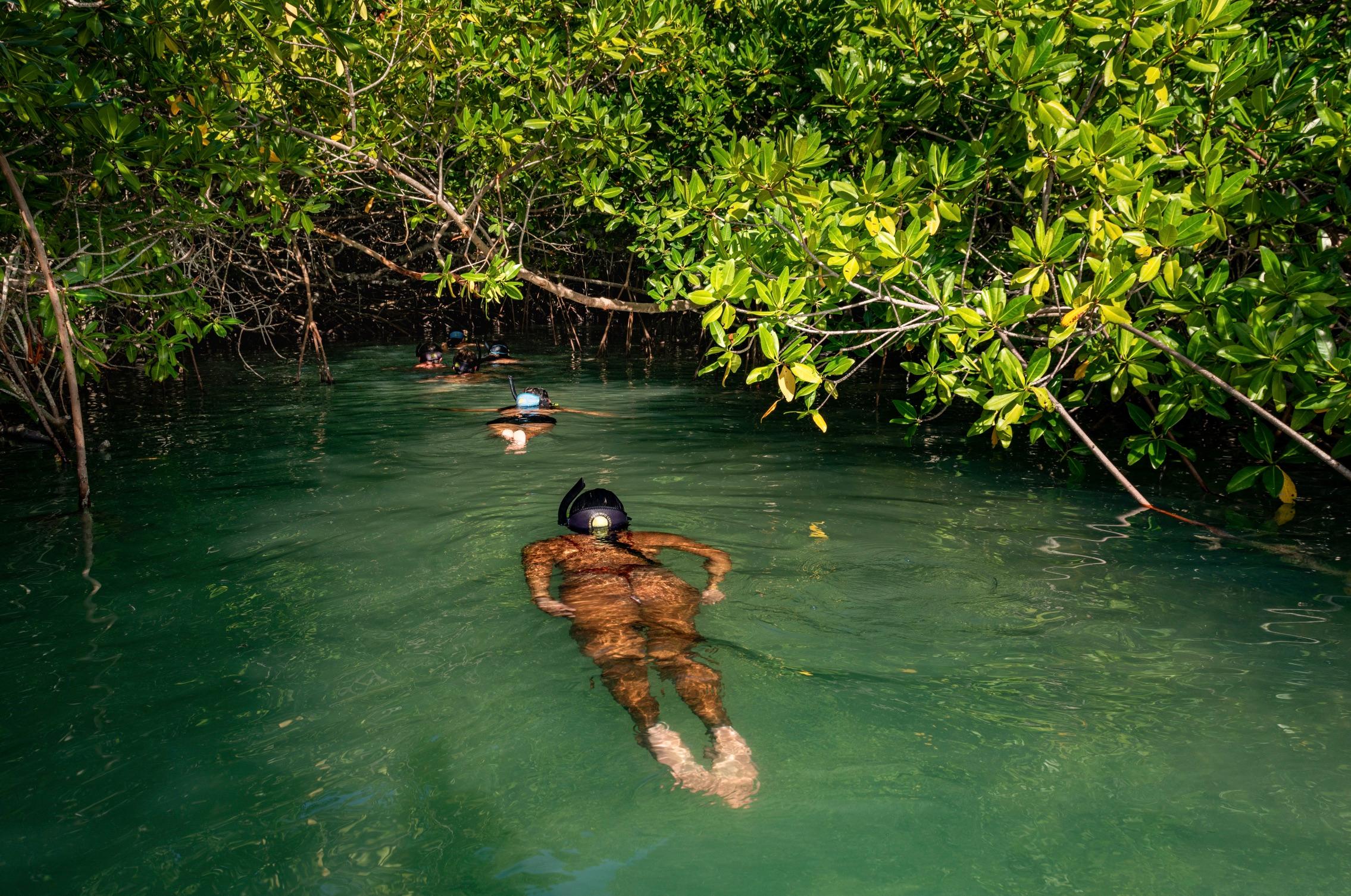
Paddle through Bonaire's mangroves and snorkel in hidden spots only reachable by kayak
Reserve
1 hr 30 min
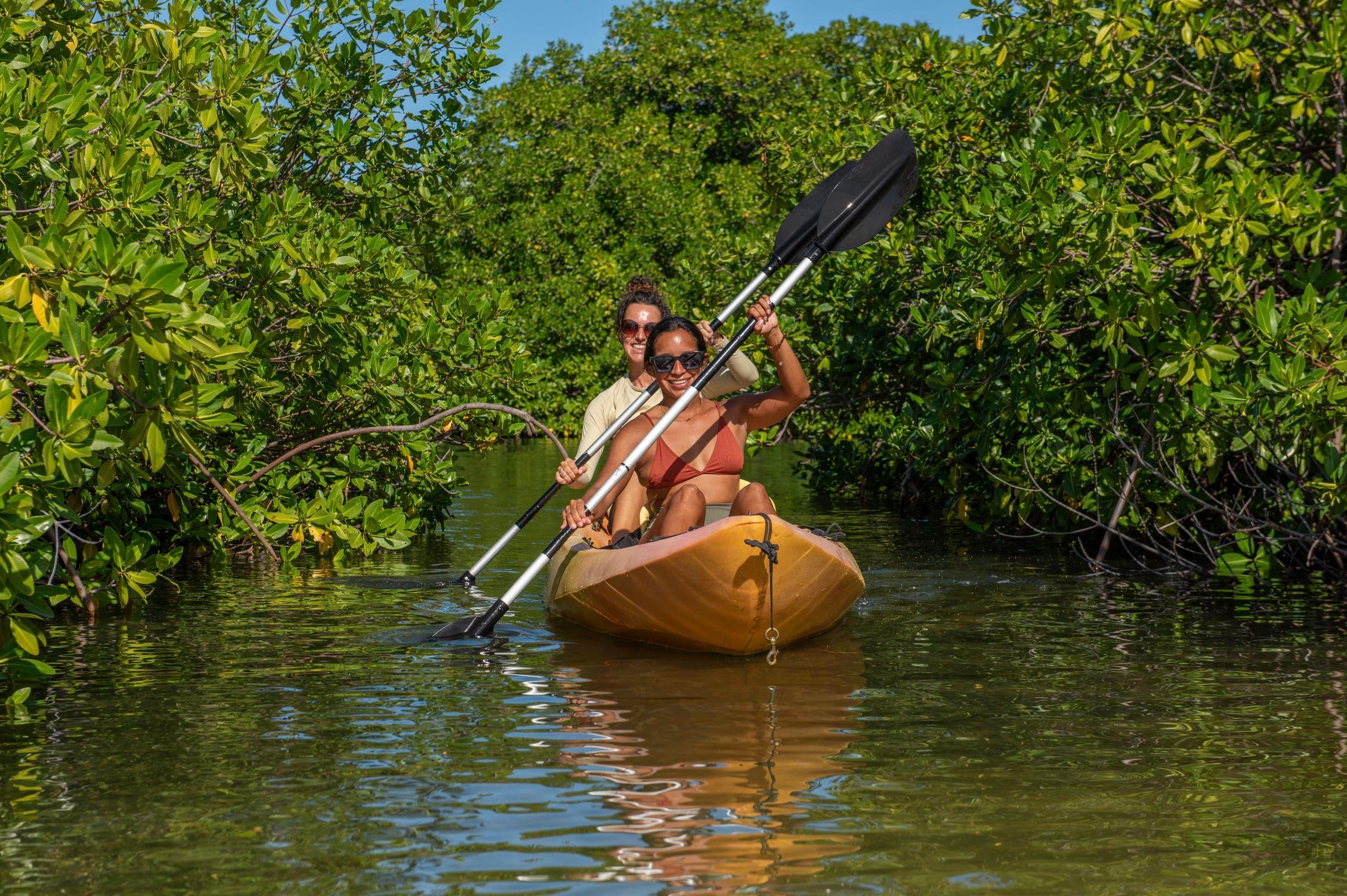
Paddle through Bonaire's serene mangrove channels on a guided eco-tour through Lac Bay's protected waters
ReservePrices from verified partners. Availability updates in real time at checkout. Free cancellation policies apply where shown.
The landmarks, rooms, and views travelers on this tour remember — all visible on a single visit.
These dense, red-rooted tunnels form the heart of the forest and act as essential nurseries for juvenile reef fish.
This expansive area is a vital feeding ground for sea turtles and the endangered Queen Conch, often seen in the shallows.
The calm, protected channels are a haven where juvenile fish develop before moving out to the main reef.
A silent, eco-friendly way to navigate the mangroves without disturbing the natural habitat or wildlife.
The forest edge is a prime location to spot wading birds like herons and flamingos foraging in the shallows.
The solar-powered boat experience offers a relaxed, passenger-focused observation, whereas guided kayaking provides a physically engaged, immersive connection to the ecosystem; most visitors find the boat more comfortable for quiet wildlife watching, while kayakers prefer the active nature of navigating the smaller channels.
| Feature | Top pick Solar Boat Tour | Guided Kayaking |
|---|---|---|
Physical exertion level |
None (seated) | Moderate (paddling) |
Environmental impact |
Very low (electric motor) | Minimal (no motor) |
Access to shallow channels |
Limited to wider areas | High (shallow water access) |
Privacy and group size |
Medium group size | Small group focused |
Bird and wildlife viewing angle |
High/Panoramic | Low/Water-level |
| See tickets → |
Verdict: Choose the Bonaire mangrove boat tour if you prioritize comfort and effortless viewing, or select kayaking to navigate deeper into the restricted waterways where these Bonaire landmarks truly shine. For those interested in securing bonaire mangrove boat tour tickets, check availability for the solar boat experience at the official site. Whether you choose boat tours or kayaking, the Lac Bay marine park remains an essential destination. Booking bonaire mangrove boat tour tours in advance ensures your spot for this unique exploration. Comparing these options helps guests decide between a guided boat tour or a self-propelled water excursion.
Choose your ticket, select your date, and reserve in under two minutes. Secure checkout handled by our verified partner.
Instant confirmation by email, with a mobile voucher you can save offline. No printing, no queuing at a collection desk.
Arrive at the entrance, show your voucher on your phone, and walk in. Most tickets include priority or skip-the-line access.
Practical details for your visit straight from our verified partners — hours, access, rules, and how to get there.
Wear swimwear and clothing that can get wet during your bonaire mangrove boat tour. A UV-protective shirt is recommended to shield against the sun, as well as water shoes.
The bonaire mangrove boat tour operator provides dry bags for your essentials and secure lockers at the center. Do not leave valuables unattended in your vehicle.
You are encouraged to bring a camera or phone to document your bonaire mangrove boat tour, but please ensure it is secured in a waterproof bag. The center provides these for guest use during the excursion.
The solar boat option is suitable for guests who prefer a seated, non-paddling bonaire mangrove boat tour. Please contact the center in advance to discuss specific mobility needs for the best experience.
Mobile phones are permitted during your bonaire mangrove boat tour, provided they are kept in a dry bag when near the water. Use them to capture photos of the local wildlife.
Children are welcome on the bonaire mangrove boat tour if they meet the age and supervision requirements. The silent solar-powered vessel is an excellent choice for a family-friendly excursion.
Water refill stations are available at the center for your bonaire mangrove boat tour; please bring a reusable bottle. No food or drinks are provided during the excursion.
Pets are not permitted on the bonaire mangrove boat tour due to the protected status of the Lac Bay marine environment.
Parking is available at the site, though the road can be uneven. Always display your STINAPA Nature Fee receipt, which is mandatory for all water activities during your bonaire mangrove boat tour.
Best time to go, insider tips, nearby landmarks, and the cancellation fine print — flip through to skim what matters to you.
Flexible, no hidden fees.
You may cancel or reschedule your bonaire mangrove boat tour booking with a full refund if requested at least 24 hours in advance. Please note that the 40 USD STINAPA Nature Fee required for all water activities in the Marine Park is non-refundable by the center.
Lac Bay's mangrove forest covers 750 acres of shallow water, the largest such nursery in the Dutch Caribbean and the only stand on Bonaire dense enough to paddle beneath a closed canopy. Red mangroves anchor the system, their prop roots descending into water rarely deeper than two meters, while black mangroves fringe the perimeter where salinity spikes during dry months. The forest emerged roughly 6,000 years ago as sea levels stabilized, and sediment trapped by the roots has been building land ever since at a rate of two millimeters per year. Researchers from Wageningen University documented 58 fish species using the roots as nursery habitat in a 2018 survey, including juvenile parrotfish, snappers, and tarpon that migrate to the reef once mature. The mangroves also buffer storm surge, a function that became measurable after Hurricane Omar in 2008 when wave energy dropped by 70 percent within 50 meters of the forest edge. The bay sits within the Bonaire National Marine Park, established in 1979 and among the first fully protected coral reef systems in the Caribbean. The 40-dollar STINAPA nature fee supports mooring buoy maintenance, ranger patrols, and the removal of invasive lionfish, which arrived in Bonaire waters in 2009 and now number an estimated 200,000 across the island's dive sites. Mangrove removal is prohibited under marine park regulations, and anchoring within the forest has been banned since 1991 to prevent root damage. Solar-powered tour boats entered service in 2014 as a quieter alternative to motorized skiffs, their shallow draft allowing passage through channels as narrow as three meters without prop wash disturbing sediment or juvenile fish. Visitors who prefer not to kayak can board solar boats that glide beneath the canopy at walking speed, the silence broken only by water lapping against roots and the occasional cry of a brown pelican roosting overhead. The boats seat six to eight passengers and operate on lithium batteries recharged by roof-mounted photovoltaic panels, a setup that eliminates fuel emissions and engine noise that can stress nesting herons. Morning departures offer the best visibility, as midday heat creates surface glare that obscures underwater views of crabs and snapping shrimp. Guides trained by the Mangrove Information Center point out osprey nests, explain the root filtration process that removes nitrogen from seawater, and identify the spiny lobsters that hide in crevices formed by overlapping roots. The center itself, located at Kaminda Lac 140, operates daily except Sunday and provides interpretive materials on mangrove ecology for visitors waiting to depart.
"Sediment trapped by the roots has been building land at a rate of two millimeters per year for six millennia."
A step-by-step walkthrough of the visit — what you'll see, how long each stage takes, and the details that matter.
You arrive at the Mangrove Information Center before 10:00, when the water is still and the air temperature hovers near 28 degrees Celsius. A guide checks your STINAPA wristband and leads you down a wooden dock to a solar boat, its white hull spotless and its roof lined with black panels. You step aboard, choose a bench seat near the bow, and watch as the boat slips away from the dock without a sound. The channel narrows to four meters, then three, and the canopy closes overhead. Roots descend in curtains on both sides, their surfaces encrusted with oysters and barnacles. The guide cuts the motor entirely and lets the boat drift, pointing out a yellow warbler perched on a branch and a juvenile queen triggerfish darting beneath the hull. You lean over the side and see a hermit crab the size of a golf ball clinging to a root, its shell a faded spiral of pink and brown. The boat turns into a wider lagoon where the canopy opens and sunlight hits the water in shafts. A great egret lifts off from a mangrove island, its wings spanning a meter as it crosses to the opposite shore. The guide explains that the roots filter sediment and trap nutrients, keeping the bay's water clear enough to see bottom at two meters. You drift for another 20 minutes, passing osprey nests and a cluster of black mangroves with pneumatophores jutting from the mud like fingers, before the boat turns back toward the dock.
The center is open Mon–Sat 08:00–17:00 for your bonaire mangrove boat tour.
Yes, a 40 USD STINAPA Nature Fee is required for all water activities in the Marine Park.
Yes, we offer a solar boat tour as a relaxing alternative for those who prefer not to paddle during their bonaire mangrove boat tour.
Morning hours of 08:00–10:00 are best for your bonaire mangrove boat tour due to cooler temperatures and calmer water.
Yes, you can book your bonaire mangrove boat tour tickets via the official site at https://www.mangrovecenter.com.
No, the 40 USD STINAPA Nature Fee is a separate legal requirement for all water activities on Bonaire.
Wear light, quick-drying clothing and UV protection for your bonaire mangrove boat tour.
Yes, families are welcome on the bonaire mangrove boat tour, but check age limits for specific vessels.
The address is Kaminda Lac 140; follow the signs to Lac Bay for your bonaire mangrove boat tour.
You can cancel your bonaire mangrove boat tour 24 hours in advance for a full refund, excluding the STINAPA fee.